
How to Choose Cabinet Handles UK | Kitchen Size, Style & Materials Guide
How to choose cabinet handles UK for your kitchen. Learn the right size, style and materials for drawers and cupboards for a clean, practical look that lasts.
4/14/20262 min read
How to Choose Cabinet Handles for Your Kitchen (UK Guide)
Choosing cabinet handles might seem like a small detail, but it has a huge impact on how your kitchen looks and feels. The right handles improve usability, complement your design, and tie the whole space together.
In this guide, we’ll walk through everything you need to consider—from sizes and placement to materials and style—so you can make the right choice with confidence.
1. Choosing the Right Handle Size
Handle size is one of the most important decisions.
In the UK, the most common hole centre sizes are:
96mm – compact, often used on smaller drawers
128mm – versatile and widely used
160mm – modern look, great for larger drawers and cupboards
What works best?
Small drawers: 96mm or 128mm
Medium drawers/cupboards: 128mm
Wide drawers: 160mm or larger
👉 A good rule: the wider the drawer, the longer the handle
Consistent sizing across your kitchen creates a clean, professional look.
2. Knobs vs Handles – What Should You Use?
Both have their place.
Knobs:
Ideal for cupboard doors
Compact and minimal
Traditional or classic look
Handles (drawer pulls):
Better grip for drawers
More practical for daily use
Modern and ergonomic
Best approach:
👉 Use handles for drawers and knobs for doors
—or go all handles for a cleaner, modern style.
3. Placement Matters More Than You Think
Even high-quality handles can look wrong if placed poorly.
Standard placement:
Drawer fronts: centred horizontally and vertically
Cupboard doors:
Vertical near the edge (most common)
Horizontal for modern designs
Consistency is key
Make sure all handles:
Align visually
Follow the same positioning logic
👉 Small inconsistencies are very noticeable
4. Choosing the Right Material
Material affects both appearance and durability.
Metal handles:
Strong and widely available
Can feel cold or industrial
Often mass-produced
Brass:
Premium look
Warmer tone than steel
More expensive
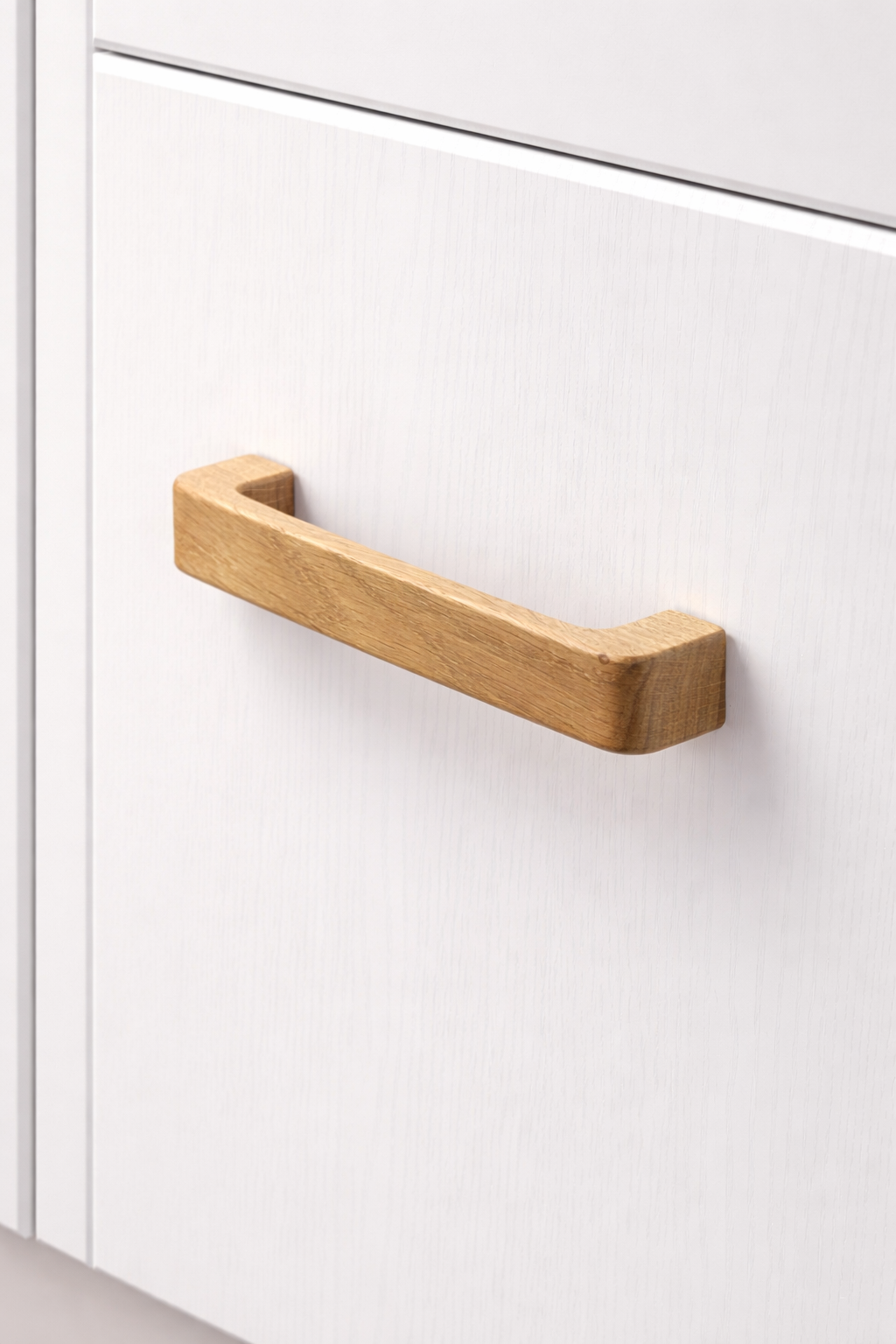
Wooden handles (solid oak):
Warm, natural appearance
Comfortable to touch
Matches modern and Scandinavian interiors
👉 Solid oak cabinet handles are especially popular for:
Light kitchens
Minimalist designs
Natural interiors
They age well and develop character over time, unlike coated metals that can wear.
For a deeper look at oak options, see our Complete buyer’s guide to solid oak cabinet handles
5. Matching Handles to Your Kitchen Style
Your handles should match your overall design direction.
Modern kitchens:
Clean lines
Longer handles (e.g. 160mm)
Light wood or matte finishes
Traditional kitchens:
Smaller handles or knobs
Warmer tones
Decorative shapes
Scandinavian style:
Minimal
Natural materials
Soft curves
👉 This is where solid oak works particularly well
6. Comfort and Everyday Use
Handles aren’t just visual—they’re functional.
Look for:
Smooth edges
Comfortable grip
Enough clearance for fingers
If a handle looks good but feels awkward, you’ll notice it every day.
7. Quality Makes a Difference
Cheap handles may look similar in photos, but:
Finishes wear out
Edges feel rough
Fixings loosen over time
High-quality handles:
Feel solid
Have smooth finishing
Last for years
Conclusion
Choosing cabinet handles comes down to:
Size – match your furniture
Style – match your kitchen
Material – match your taste and durability needs
Placement – keep it consistent
Get these right, and your kitchen will feel more complete and intentional.
Explore Solid Oak Options
If you’re looking for a natural, durable and timeless option, you can explore our range of solid oak cabinet handles: 👉 View our solid oak cabinet handles
UK Woodpeckers — Handcrafted in Devon, UK.
© 2026 UK Woodpeckers Handcrafted in Devon, UK. All rights reserved.
Contact: info@ukwoodpeckers.co.uk