oak ash beech wood comparison — which British hardwood should you choose?
Oak ash beech wood comparison: durability, hardness, grain patterns explained. Find the best British hardwood for your woodworking or home projects today .
3/15/20266 min read
Oak vs Ash vs Beech: Which British Hardwood is Right for Your Home?
Britain has a rich tradition of working with native hardwoods, and for good reason. Oak, ash and beech have been used by craftspeople on these islands for centuries — each with its own character, its own strengths, and its own ideal applications. If you're commissioning a bespoke piece or choosing hardware for your home, understanding the differences between these three timbers will help you make a choice you'll be happy with for years to come.
This guide compares oak, ash and beech side by side — covering appearance, grain, durability, workability, and the types of projects each timber suits best.
Oak — The King of British Hardwoods
Oak is the most iconic of Britain's native hardwoods and the one most people reach for instinctively when they want quality, warmth, and longevity. It's been used in everything from medieval cathedrals to Tudor furniture, and its popularity shows no sign of waning.
Appearance
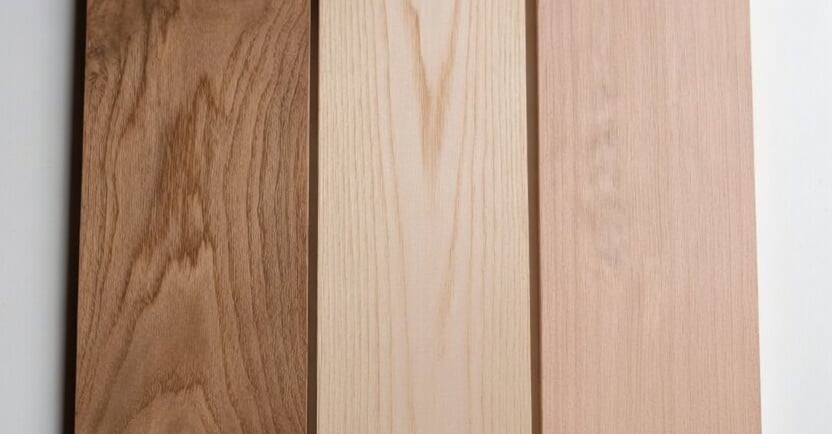
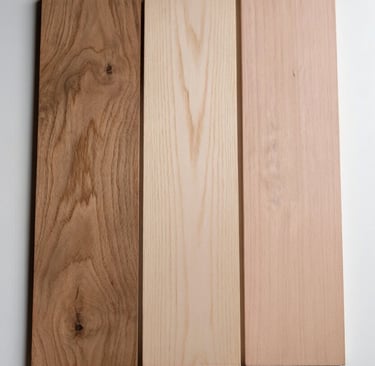
European oak has a warm, golden-brown colour with a pronounced, open grain. One of its most distinctive features is the medullary rays — the fine silver-grey flecks that run across the grain in quarter-sawn oak, giving it a subtle shimmer that no other British hardwood replicates. These rays become more prominent as the timber is finished, particularly with an oil finish.
Grain & Texture
Oak has a coarse, open grain that takes carving and CNC routing extremely well — the open pores hold detail crisply and the grain itself adds visual interest to any carved surface. It's not as uniform as beech, which makes every piece slightly individual.
Durability
Oak is exceptionally durable. It's naturally high in tannins, which give it strong resistance to rot, fungal attack, and insect damage. This is why oak has been used in exterior joinery, ship building, and structural timberwork for centuries. A well-finished oak piece will perform outdoors as well as indoors.
Workability
Oak machines and carves well, though its open grain means it can tear slightly if cutting against the grain. It holds fixings securely and finishes beautifully with both oil and varnish.
Best For
Oak is the ideal choice for pieces where warmth, character, and longevity are the priority. House signs, cabinet handles, drawer pulls, decorative carvings, and any piece where the grain is meant to be seen and appreciated.
Available at UK Woodpeckers: Oak is our primary timber, used across our full range of handles, house signs, and bespoke commissions.
Ash — The Pale, Athletic Hardwood
Ash is often underestimated, overshadowed by the prestige of oak — but it's a remarkable timber with qualities that oak simply can't match in certain applications. It's the timber of tool handles, sports equipment, and traditional Windsor chairs for a reason.
Appearance
Ash is significantly paler than oak — almost white or cream in colour, with a straight, pronounced grain and relatively few of the subtle colour variations you see in oak. The contrast between the pale sapwood and the slightly darker heartwood can be striking, particularly in wider boards. When finished with a dark oil or stain, ash takes on a completely different character — dramatic and contemporary.
Grain & Texture
Ash has a straighter, more uniform grain than oak, which gives it a cleaner, more graphic appearance. It's slightly more open-grained than beech but tighter than oak, and it machines to a very smooth surface.
Durability
Ash is tough and flexible — more so than oak in terms of impact resistance, which is why it's the traditional timber for axe handles, oars, and cricket stumps. For indoor furniture and hardware, it's highly durable. It's less naturally rot-resistant than oak, so it's better suited to interior use than prolonged exterior exposure.
Workability
Ash is one of the most workable of the British hardwoods. It cuts cleanly, carves well, and takes both paint and stain beautifully — making it an excellent choice when you want coloured or painted lettering that really stands out against the wood.
Best For
Ash is ideal when you want a lighter, more contemporary look — or when you're planning to paint or stain part of the piece for contrast. It works particularly well for house signs where white or dark epoxy resin lettering is used against a pale background, and for handles in Scandi-style or modern interiors.
Available at UK Woodpeckers: Ash is available for handles, house signs, and bespoke commissions. Its pale colour makes it particularly effective for high-contrast lettering and inlay work.
Beech — The Understated Workhorse
Beech doesn't have the prestige of oak or the dramatic grain of ash, but it's a quietly excellent timber that deserves more attention than it gets. It's been the backbone of British furniture making — particularly chairs and workshop tools — for centuries.
Appearance
Beech is pale pink to cream in colour, with a fine, even grain and small, uniform pores. It has a subtle, almost understated beauty — less visually dramatic than oak or ash, but with a warmth and smoothness that makes it particularly pleasant to handle.
Grain & Texture
Beech has the finest, most uniform grain of the three timbers. It machines to an exceptionally smooth surface and holds very fine detail well — making it excellent for intricate carved work where crisp edges are important.
Durability
Beech is a hard, dense timber — harder than both oak and ash in terms of surface hardness, which makes it very resistant to wear and denting. It's less naturally durable outdoors than oak, however, and is best suited to interior applications.
Workability
Beech is a pleasure to work. It cuts cleanly, carves precisely, and takes both paint and natural finishes extremely well. Its fine grain means that painted surfaces are particularly smooth and uniform.
Best For
Beech is ideal for interior pieces where a smooth, refined finish is the priority — particularly carved decorative work, small items like handles and knobs, and pieces that will be painted or finished in a colour rather than left natural.
Available at UK Woodpeckers: Beech is available on request for bespoke commissions. If you have a specific project in mind, get in touch to discuss whether beech is the right choice.
Side-by-Side Comparison
Oak Ash Beech Colour Warm golden-brown Pale cream/white Pale pink-cream Grain Open, pronounced Straight, graphic Fine, uniform Durability Excellent (interior & exterior) Very good (interior) Very good (interior) Best finish Oil or varnish Oil, stain or paint Paint or clear varnish Character Rich, traditional Clean, contemporary Refined, understated Carving detail Very good Good Excellent Availability Standard Standard On request
Which Should You Choose?
Choose oak if you want warmth, character, and the most timeless British aesthetic. Oak suits traditional, heritage, and country properties particularly well and performs outdoors as well as indoors. It's the most versatile of the three.
Choose ash if you want a lighter, more contemporary look, or if you're planning high-contrast lettering or coloured inlays. Ash's pale colour makes dark or coloured finishes really sing, and it suits modern, Scandi-influenced interiors beautifully.
Choose beech if you want the smoothest possible finish, particularly for interior carved work or painted pieces. Beech's fine, even grain produces exceptional results for intricate detail work and painted finishes.
If you're still not sure — get in touch. We're happy to show you samples of all three timbers and help you make the right choice for your specific project and home.
Frequently Asked Questions
Is oak always the best choice for house signs? Oak is the most popular choice and performs exceptionally well outdoors, but ash can be equally effective for contemporary properties, particularly where high-contrast lettering is wanted. The right choice depends on your property's aesthetic as much as anything else.
Which British hardwood is the most durable outdoors? Oak, by a clear margin. Its natural tannin content gives it rot resistance that ash and beech can't match without additional treatment. For exterior signs and joinery, oak is the safest choice.
Can beech be used for exterior signs? We don't recommend beech for exterior use without very thorough sealing and regular maintenance. Oak or iroko are better choices for pieces that will be permanently exposed to weather.
Are these timbers sustainably sourced? We source our oak, ash and beech from UK suppliers wherever possible. British hardwoods are a renewable resource — grown and harvested on these islands — which makes them a far more sustainable choice than imported tropical hardwoods.
How do the prices compare? Oak and ash are comparably priced. Beech is available on request and priced individually depending on the commission. Get in touch for a specific quote.
Ready to Choose Your Timber?
Whether you're after a solid oak cabinet handle, a bespoke ash house sign, or a one-off beech commission, we'd love to hear about your project.
UK Woodpeckers — Handcrafted in Devon, UK.
© 2026 UK Woodpeckers Handcrafted in Devon, UK. All rights reserved.
Contact: info@ukwoodpeckers.co.uk