
How to Care for Oak Furniture: Complete Guide [2026]
Expert guide to caring for oak furniture. Learn professional cleaning, oiling and maintenance techniques from a UK woodworking specialist. Protect your investment.
3/8/20266 min read
How to Care for Solid Oak Furniture & Hardware: The Complete Guide
Solid oak is one of the most rewarding materials you can bring into your home. It's tough, characterful, and — unlike most modern materials — actually improves with age when looked after properly. But "looked after properly" is the key phrase. Oak that's neglected or maintained incorrectly can dry out, stain, or lose its finish far sooner than it should.
This guide covers everything you need to know about caring for solid oak furniture and hardware, from day-to-day cleaning to periodic re-oiling — based on the finishes and techniques we use in our Devon workshop.
Understanding Your Oak Finish First
Before you can care for oak properly, you need to know what finish has been applied. Different finishes require different maintenance approaches, and using the wrong product on the wrong finish can do more harm than good.
Osmo Oil
Osmo Polyx-Oil is a hard wax oil made from natural plant oils and waxes. It penetrates deep into the wood grain rather than sitting on the surface as a film, which means it nourishes the timber from within and allows the wood to breathe naturally. The result is a tactile, natural feel that enhances the grain without plasticising it.
At UK Woodpeckers, we finish many of our oak handles and hardware pieces with Osmo oil. It's our preferred choice for pieces that will be touched every day — the feel is warmer and more natural than a lacquer or polyurethane, and it's straightforward to maintain at home.
How to identify it: An Osmo-oiled surface feels slightly soft and natural to the touch, closer to bare wood than a varnished surface. Water beads on the surface rather than soaking in.
Clear Satin Polyurethane
Polyurethane varnish forms a hard, protective film on the surface of the wood. Clear satin gives a subtle sheen without the high-gloss look of a full gloss finish. It's more resistant to moisture and abrasion than an oil finish, making it a good choice for surfaces that see heavy use or frequent water contact.
How to identify it: A polyurethane surface feels harder and more uniform to the touch. It has a slight plastic quality compared to an oiled surface. You may be able to see the film layer on edges and corners.
Day-to-Day Cleaning
For both Osmo-oiled and polyurethane-finished oak, the daily care routine is straightforward.
Use a soft, dry or slightly damp cloth. For light dust and everyday marks, a dry microfibre cloth is all you need. For stickier marks, dampen the cloth slightly with plain water and wipe gently.
Always wipe in the direction of the grain. Wiping across the grain can leave fine scratches, particularly on oiled surfaces.
Dry immediately after wiping. Never leave moisture sitting on an oak surface. Wipe away any water promptly — this applies to spills, condensation from glasses, and damp cloths alike.
For handles and hardware specifically, a quick wipe after use keeps the finish looking its best and prevents the gradual build-up of natural skin oils which can dull the surface over time.
What to Avoid
These are the most common mistakes that damage oak finishes — and they're all easily avoided.
Avoid harsh cleaning products. Bleach, ammonia-based cleaners, and multi-surface sprays are too aggressive for wood finishes. They strip the surface protection and can cause discolouration. Plain water or a specialist wood cleaner is all you need.
Avoid silicone-based polishes. Products like aerosol furniture polishes often contain silicone, which gives a short-term shine but builds up on the surface over time and makes future re-finishing very difficult. If you ever want to re-oil or re-varnish the piece, silicone contamination will cause the new finish to fish-eye and fail.
Avoid leaving wet items on oak surfaces. Glasses, plant pots, and damp cloths left sitting on oak will cause white water marks or dark staining over time, even on a sealed surface. Use coasters and trivets.
Avoid direct heat. Hot mugs, pans, and radiators placed directly against oak can cause the finish to blister or the timber to dry out and crack. Always use heat protection.
Avoid prolonged direct sunlight. UV light causes oak to fade and the finish to break down more quickly. On south-facing furniture or exterior pieces, this is worth bearing in mind.
Maintaining an Osmo Oil Finish
One of the great advantages of an Osmo oil finish is how easy it is to maintain. Unlike a film finish, you don't need to strip it back and start again — you simply re-apply a thin coat when the surface starts to look dry or loses its water-repellency.
How often? For interior oak handles and furniture in normal use, once every one to two years is usually sufficient. High-traffic pieces like frequently used cabinet handles may benefit from more regular attention.
How to re-oil:
1. Clean the surface thoroughly with a damp cloth and allow to dry completely
2. Apply a very thin coat of Osmo Polyx-Oil with a lint-free cloth or fine brush — less is more with Osmo, thin coats always outperform thick ones
3. Work in the direction of the grain
4. Leave for 8–10 hours to cure
5. If a second coat is needed, lightly sand with a fine abrasive (240 grit) and apply another thin coat
Important: Use the same Osmo product that was originally applied if possible — Osmo make several variants (clear, tinted, satin, matt) and mixing them can affect the final appearance.
Maintaining a Polyurethane Finish
A polyurethane finish requires less frequent maintenance than an oil finish but needs more effort when it does eventually need attention.
Day to day, a damp cloth and prompt drying is all that's required. The hard film surface is more forgiving of moisture and light abrasion than an oiled finish.
When the finish starts to wear — typically showing as dull patches, fine scratches, or areas where moisture is no longer beading — it's time to re-finish.
How to re-varnish:
1. Clean the surface thoroughly and allow to dry
2. Lightly sand the entire surface with 240 grit sandpaper to provide a key for the new coat
3. Wipe away all dust with a tack cloth
4. Apply a thin, even coat of clear satin polyurethane with a good quality brush
5. Allow to dry fully (check manufacturer's guidance — typically 4–6 hours)
6. Lightly sand again with 320 grit and apply a second coat for best results
Caring for Exterior Oak — House Signs
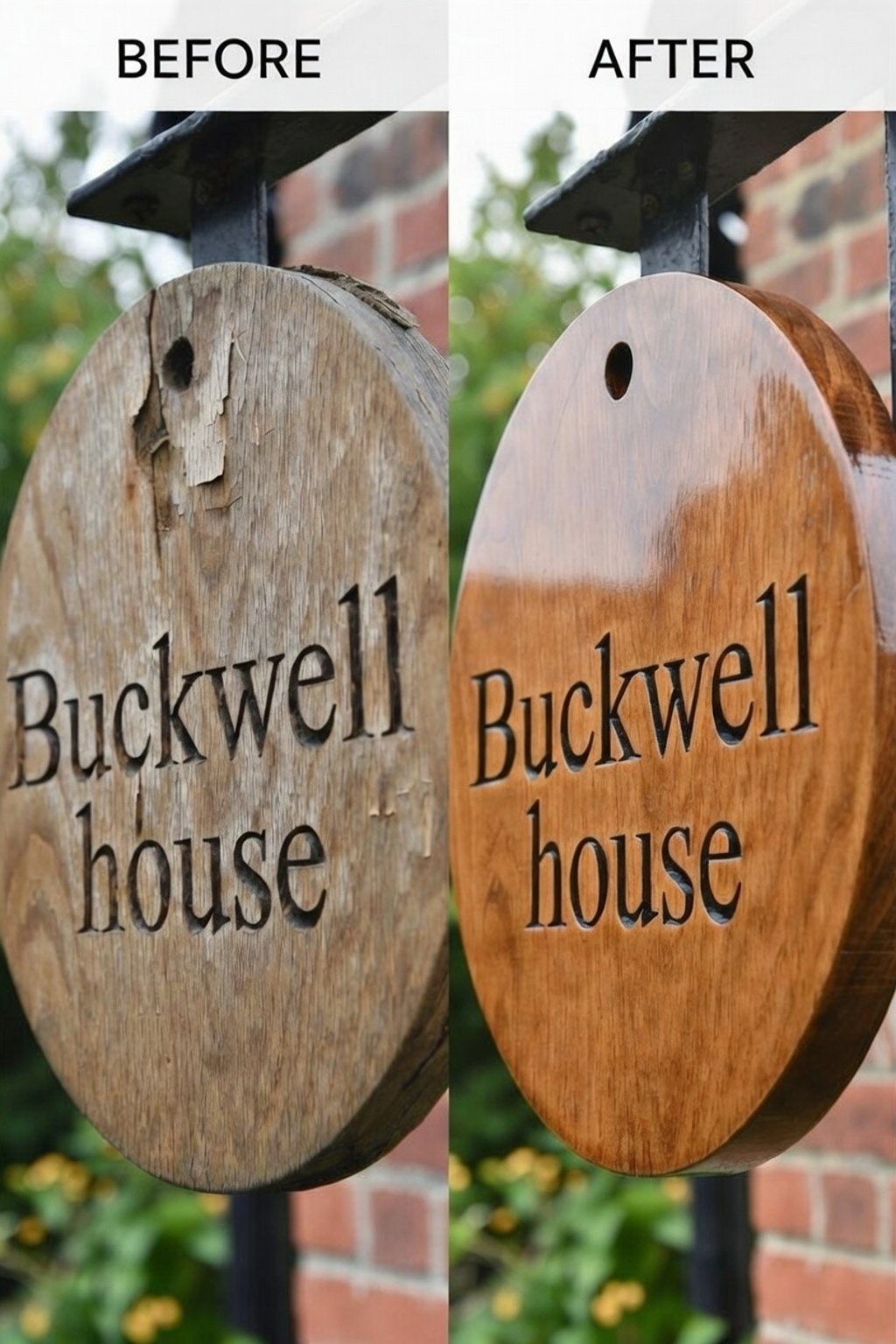
Exterior oak pieces like bespoke house signs need a little more attention than interior furniture, as they're exposed to UV, rain, and temperature fluctuations throughout the year.
At UK Woodpeckers, all our exterior wooden signs are finished with yacht-grade varnish — a flexible, high-performance coating specifically formulated for outdoor exposure. It's the same product used on wooden boat hulls, chosen because it flexes with the timber through seasonal changes without cracking.
For maintenance of exterior oak signs:
- Inspect annually, particularly after winter
- If the surface looks chalky, dull, or is showing fine cracks in the varnish film, it's time for a re-coat
- Lightly sand with 240 grit, wipe clean, and apply a thin coat of exterior-grade varnish
- Pay particular attention to end grain and edges where moisture ingress is most likely
South-facing signs with high UV exposure will need more frequent attention than north-facing ones.
Frequently Asked Questions
Can I use olive oil or vegetable oil on oak?
No — cooking oils will go rancid inside the wood grain, causing an unpleasant smell and potentially darkening the timber in unpredictable ways. Always use a purpose-made wood oil like Osmo.
My oak has a white water mark — how do I remove it?
For Osmo-oiled surfaces, a light re-oil will often blend the mark in. For polyurethane surfaces, try rubbing very gently with a fine abrasive (0000 steel wool) in the direction of the grain, then clean and re-varnish the area.
Can I change the finish on my oak piece?
Yes, but it requires stripping the existing finish first — sanding back to bare wood — before applying the new product. Never apply an oil finish over a polyurethane or vice versa without removing the original finish first.
My oak handle has gone grey — is it ruined?
Greying is caused by UV exposure and moisture and is a surface effect only. Sand back lightly to reveal the fresh timber beneath and re-finish. The oak itself is perfectly sound.
How do I know if my UK Woodpeckers piece has an Osmo or polyurethane finish?
If you're not sure, check your original order — we include finish details with every commission. You can also contact us directly and we'll advise on the right maintenance approach for your specific piece.
Need New Oak Hardware?
If you're refreshing your kitchen or updating your furniture, browse our collection of handmade solid oak cabinet handles and drawer pulls — finished to the same standard described in this guide, and built to last.
UK Woodpeckers — Handcrafted in Devon, UK.
© 2026 UK Woodpeckers Handcrafted in Devon, UK. All rights reserved.
Contact: info@ukwoodpeckers.co.uk